
Six Sigma: Green Belt
1h 53mIntermediate2021-03-15
Authors
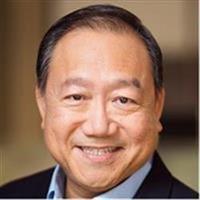
Richard Chua
Professor and certified Lean Six Sigma Master Black Belt trainer
Course details
Six Sigma is a customer-focused, data-driven methodology that is widely used to analyze and improve the performance of processes, products, and services. In this course, get the training you need to become a Six Sigma Green Belt. Green Belts participate in—or lead—Six Sigma projects on a part-time basis under the guidance of a Black Belt. Operational excellence expert, master Black Belt trainer, and professor Dr. Richard Chua explains how to use Six Sigma and its process, quality, and statistical tools as he prepares you to become a Six Sigma Green Belt.
Note: Dr. Richard Chua builds upon his Six Sigma Foundations and Learning Minitab courses, and covers an array of topics, including measurement system analysis, descriptive statistics, hypothesis testing, design of experiments, statistical process control, and more.
Topics include:
Six Sigma and the organization
Collecting the voice of the customer
Project management basics
Process maps
Sampling in data collection
Measurement system analysis
Measuring performance using descriptive statistics
Process performance measures
Hypothesis testing
Testing for means, variances, proportions, and independence
Correlation and regression
Using selection matrices
Using failure modes and effects analysis
Developing control plans
Statistical process control
Note: Dr. Richard Chua builds upon his Six Sigma Foundations and Learning Minitab courses, and covers an array of topics, including measurement system analysis, descriptive statistics, hypothesis testing, design of experiments, statistical process control, and more.
Topics include:
Six Sigma and the organization
Collecting the voice of the customer
Project management basics
Process maps
Sampling in data collection
Measurement system analysis
Measuring performance using descriptive statistics
Process performance measures
Hypothesis testing
Testing for means, variances, proportions, and independence
Correlation and regression
Using selection matrices
Using failure modes and effects analysis
Developing control plans
Statistical process control
Skills covered
Operations ManagementProject ManagementCert PrepBusiness Analysis and Strategy
Concepts
0. Introduction
- 01 - Getting things done right the first time
- 02 - What you should know
- 03 - Certification information
- 04 - Six Sigma and the organization
1. Define Phase
- 05 - Project identification
- 06 - Collecting VOC (voice of the customer)
- 07 - Project management basics
2. Measure Phase
- 08 - Types of process maps
- 09 - Sampling in data collection
- 10 - Descriptive statistics
- 11 - Graphical displays of variation
- 12 - Measurement system analysis (MSA)
- 13 - Process performance measures
3. Analyze Phase
- 14 - Hypothesis testing basics
- 15 - Hypothesis testing protocol
- 16 - Tests for means
- 17 - Tests for variances
- 18 - Tests for proportions
- 19 - Test for independence
- 20 - Correlation and linear regression
4. Improve Phase
- 21 - Introduction to design of experiments
- 22 - Introduction to design for Six Sigma
- 23 - Use of selection matrices
- 24 - How to use failure modes and effects analysis
5. Control Phase
- 25 - Statistical process control charts
- 26 - SPC charts for variables
- 27 - SPC charts for attributes
- 28 - How to develop control plans
Conclusion
- 29 - Leading Six Sigma Green Belt projects
Related courses
Related learn paths
- Become a Six Sigma Green Belt
- Become a Six Sigma Black Belt
- Become a Six Sigma Yellow Belt
- CSCMP Supply Chain Foundations: Manufacturing and Service Operations Professional Certificate
- Strategic Execution and Business Impact for Senior Executives
- Operations Management Professional Certificate by Jack Welch Management Institute
- Explore a Career as a Supply Chain Manager
- Optimizing Enterprise Security and Productivity Using Microsoft 365